



Table of Contents
In the high-stakes world of industrial maintenance and quality assurance, the integrity of a vacuum or pressurized system is non-negotiable. Whether it is a power plant condenser, a semiconductor fabrication line, or a complex aerospace fuel system, even the most microscopic leak can lead to catastrophic failure, environmental hazards, or significant financial loss. This is where helium gas leak detection becomes the industry gold standard.
However, once you’ve decided on helium as your tracer gas, a critical question arises for maintenance managers and field engineers: Should you invest in a portable leak detector or a console (stationary/semi-mobile) unit for field service leak testing?
This comprehensive guide explores the technical nuances, operational advantages, and strategic trade-offs between portable and console helium leak detectors, helping you make an informed decision for your specific field applications.
The Science Behind Helium Gas Leak Detection
Before diving into the hardware, it is essential to understand why helium is the preferred medium. Helium is an inert gas with a very small atomic size, allowing it to pass through tiny orifices that other gases might miss. Furthermore, its low natural concentration in the atmosphere (about 5 ppm) ensures that background noise is minimized, providing a high signal-to-noise ratio for field service leak testing.
A helium gas leak detector works on the principle of Mass Spectrometry. It draws in air from the test area; if helium atoms are present, the mass spectrometer ionizes them and measures the resulting electrical current, translating it into a precise leak rate (typically measured in mbar·l/s or atm·cc/s).
Portable Leak Detectors: The Field Service “Swiss Army Knife”
What Defines a Portable Unit?
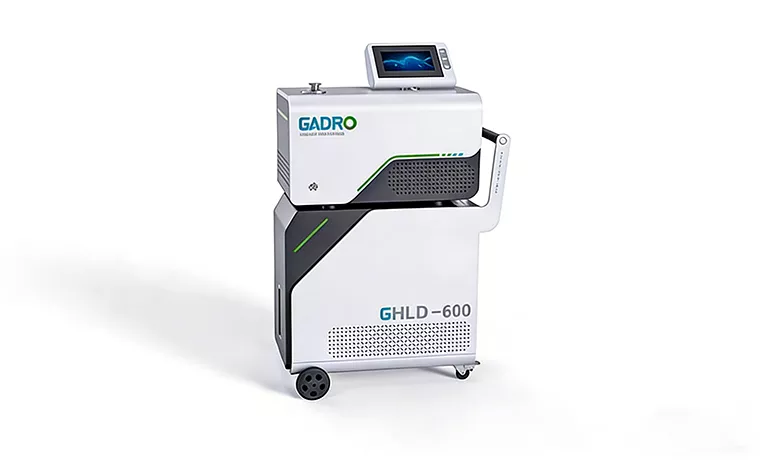
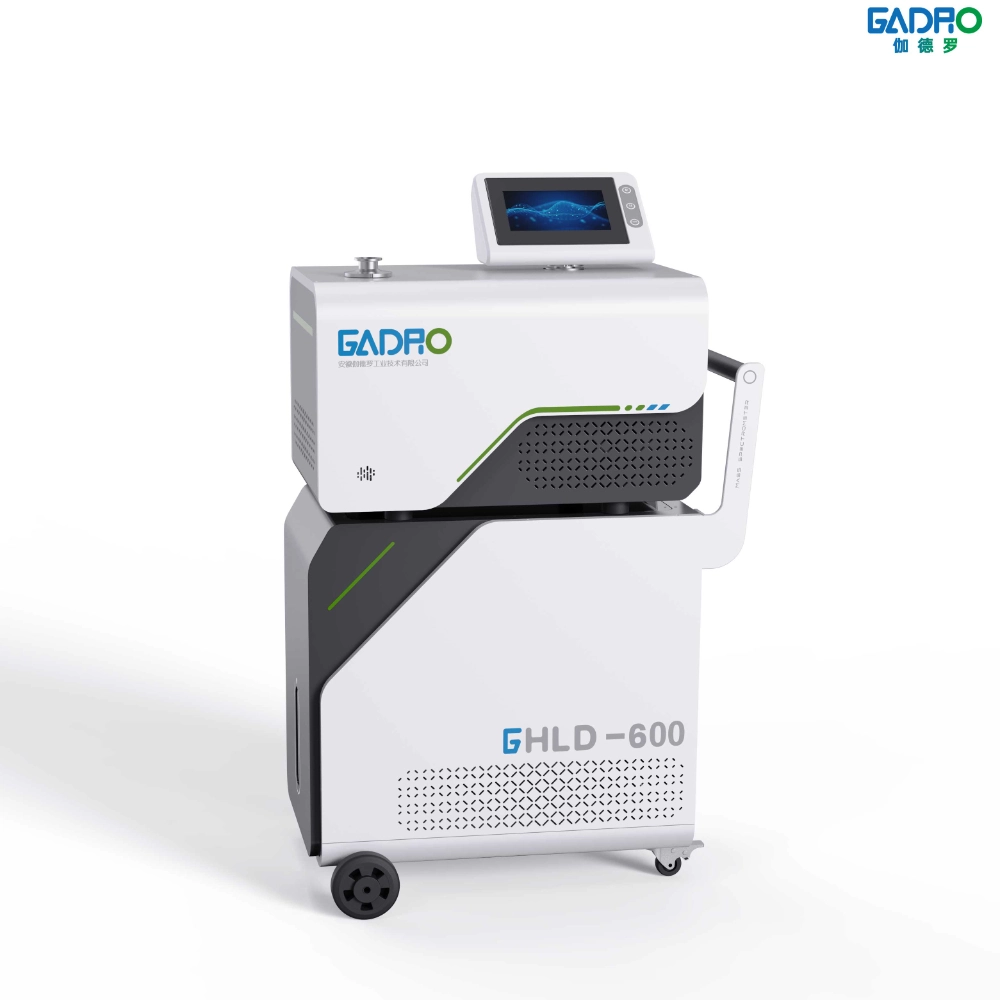
A portable leak detector is designed with one primary goal: mobility. These units are typically compact, weighing between 15kg to 30kg, and often feature ruggedized casings and ergonomic handles. Brands like Gadro Detection have perfected this form factor to ensure that “portable” doesn’t mean “compromised.”
Key Advantages for Field Service
- Ease of Transport: Field service often involves climbing ladders, navigating narrow catwalks, or traveling to remote offshore locations. A portable unit can be hand-carried or moved on a small cart without the need for a forklift.
- Rapid Deployment: Most modern portable helium leak detectors feature fast start-up times. In a field emergency, being able to power up and start testing within minutes is a massive operational advantage.
- Battery Operation: High-end portable models now offer battery-powered options, eliminating the need for long extension cords in environments where power outlets are scarce or hazardous.
- Sniffer Mode Excellence: For field service where a vacuum cannot be easily pulled (such as underground pipelines), portable units are optimized for “sniffer mode,” allowing technicians to pinpoint leaks from the outside of a pressurized system.
Trade-offs to Consider
The compact nature of a portable unit means a smaller internal vacuum pump. This can result in slower “clean-up” times if the unit becomes saturated with helium, and it may take longer to evacuate a very large test volume compared to a heavy-duty console.
Console Leak Detectors: The High-Throughput Powerhouse
What Defines a Console Unit?
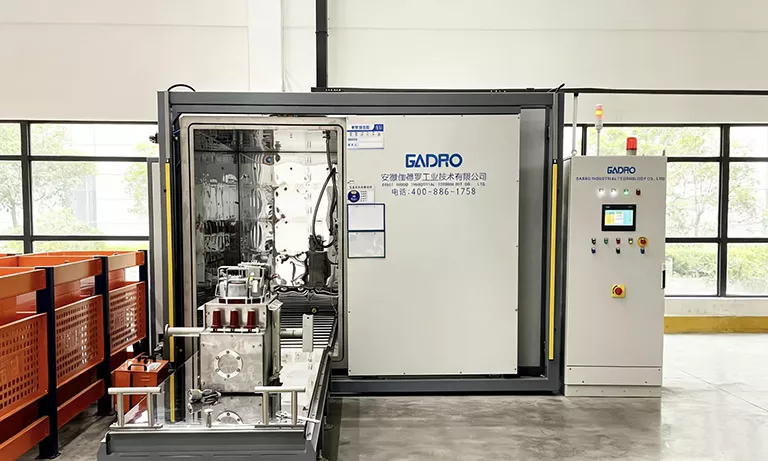
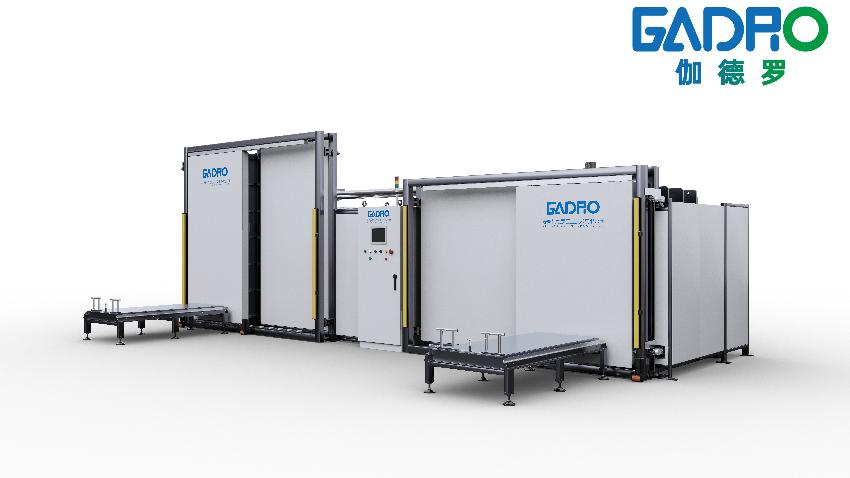
Console helium leak detectors are larger, floor-standing units, often mounted on heavy-duty casters. They are built for continuous operation, high sensitivity, and rapid testing of large volumes. While traditionally seen in laboratory or factory settings, they play a vital role in specific field service leak testing scenarios.
Key Advantages for Field Service
- Superior Pumping Speed: Console units are equipped with large primary pumps and high-capacity turbomolecular pumps. This allows them to reach test pressures in massive systems (like large heat exchangers) much faster than portable units.
- Maximum Sensitivity: If your field service requirements involve detecting the absolute smallest leaks (e.g., 1*10^-12 mbar·l/s), the larger, more stable environment of a console unit typically provides the highest precision.
- Durability for Continuous Use: Consoles are designed for 24/7 operation. For long-term field projects, such as a month-long shutdown at a nuclear facility, a console unit offers the thermal management and mechanical robustness required for non-stop use.
- Advanced Data Integration: Many console units feature larger touchscreens and more sophisticated software for logging data, generating reports on-site, and integrating with plant-wide monitoring systems.
Trade-offs to Consider
The obvious downside is weight and size. Moving a console unit requires flat surfaces, elevators, or cranes. They are not suitable for “spot checks” in hard-to-reach areas.
Head-to-Head Comparison: Finding the Right Fit
To help you choose, let’s look at how these two categories perform across critical field service metrics.
| Feature | Portable Leak Detector | Console Leak Detector |
| Mobility | Excellent (Hand-carry) | Limited (Casters/Wheeled) |
| Pumping Speed | Moderate | High |
| Sensitivity | Very High (1*10^-11) | Ultra High (1*10^-12) |
| Setup Time | Fast (3-5 mins) | Moderate (10-15 mins) |
| Ideal Use Case | On-site troubleshooting, tight spaces | Large volume systems, high-speed production |
| Durability | Rugged/Mobile-optimized | Industrial/Stationary-optimized |
1. The Volume of the System Under Test
If you are testing a small valve or a short section of tubing, a portable leak detector is more than sufficient. However, if you are tasked with evacuating a 10,000-liter chemical reactor, the pumping capacity of a console unit will save you hours of wait time.
2. Physical Accessibility
Is the leak located at the top of a 50-foot distillation column? If so, the choice is made for you. Portability is the king of field service when the environment is vertical or cluttered.
3. The Required Sensitivity Level
While both types are incredibly sensitive, some ultra-high vacuum (UHV) applications in semiconductor or research fields require the absolute limit of detection. In these rare field cases, the stability of a console unit is preferred.
Why Gadro Detection is the Preferred Partner for Field Service
In the realm of helium gas leak detectors, Gadro Detection has established a reputation for balancing high-end physics with real-world practicality. Their range of products is designed specifically to address the “Field vs. Lab” dilemma.
Gadro’s portable series focuses on intelligent helium management, reducing background noise even in contaminated field environments. Meanwhile, their larger units provide the raw pumping power needed for industrial-scale field service leak testing. By choosing a specialist like Gadro, you aren’t just buying a tool; you are gaining access to a heritage of precision engineering that understands the harsh realities of field work—dust, vibration, and temperature fluctuations.
Conclusion
Choosing between a portable and a console helium leak detector isn’t about which machine is “better” in a vacuum—it’s about which machine fits your workflow.
- Choose a portable leak detector if your field service involves frequent travel, restricted access, or the need for quick, agile troubleshooting.
- Choose a console leak detector if you are managing large-scale maintenance shutdowns, testing massive volumes, or requiring the highest possible throughput and sensitivity for extended periods.
In many modern industrial fleets, the answer is “both.” Having a console unit at the staging area for large components and portable units for localized “sniffing” and final verification provides the ultimate leak detection strategy.
FAQ
1. Can a portable helium leak detector be as sensitive as a console unit?
In most practical field applications, yes. Modern portable units can detect leaks down to 5*10^-12 mbar·l/s, which exceeds the requirements for 99% of industrial field services. The main difference is not the ability to see the leak, but the speed at which the unit can process a large volume of air to find it.
2. How often does a helium gas leak detector need calibration in the field?
For accurate field service leak testing, it is recommended to perform an internal calibration check every time the unit is moved or at the start of every shift. Most Gadro Detection units feature built-in calibrated leaks, allowing for automated calibration in under 60 seconds.
3. What is the difference between “Vacuum Mode” and “Sniffer Mode” in field testing?
Vacuum Mode involves evacuating the system and spraying helium on the outside; it is the most sensitive method. Sniffer Mode involves pressurizing the system with helium and using a probe (the “sniffer”) to detect escaping gas. Portable units are generally preferred for sniffer mode because they are easier to move around the exterior of large pressurized vessels or pipes.