



Table of Contents
In the fast-paced and highly competitive Heating, Ventilation, Air Conditioning, and Refrigeration (HVACR) industry, product reliability is non-negotiable. A microscopic leak in a compressor, coil, or heat exchanger can lead to refrigerant loss, decreased efficiency, system failure, and significant environmental impact. To ensure airtight integrity, manufacturers rely heavily on an HVAC helium mass spectrometer leak detector. However, possessing the equipment is only half the battle; utilizing the correct testing methodology is crucial. The debate between the vacuum method and the sniffer probe technique is central to optimizing production lines. This article provides a comprehensive comparison of these two approaches, helping you determine how to best deploy your leak detection technology for maximum efficiency and accuracy.
Understanding the Role of Helium in HVACR Testing
Before diving into the specific methods, it is important to understand why helium is the tracer gas of choice. Helium is the second lightest element in the universe. Its small atomic size allows it to flow through unimaginably tiny leak paths—paths that water or larger gas molecules would never penetrate. Furthermore, helium is inert, non-toxic, non-flammable, and present only in minute quantities in the normal atmosphere (about 5 ppm). This makes it safe for operators and easy for a mass spectrometer to detect against a relatively low background.
An HVAC helium mass spectrometer leak detector is a highly specialized instrument designed to identify the presence of this tracer gas. The choice of how the helium is introduced and detected fundamentally defines the testing process.
The Vacuum Method (Inside-Out Testing)
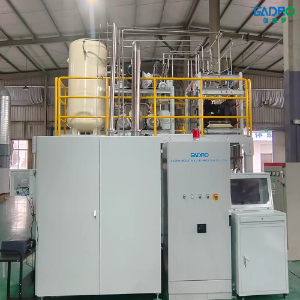
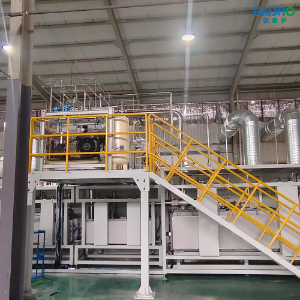
The vacuum helium leak detector method, often referred to as “hard vacuum” testing, represents the pinnacle of sensitivity in leak detection.
How It Works
In this method, the part to be tested (e.g., a completed air conditioning coil) is placed inside a dedicated vacuum chamber.
- Both the chamber and the internal volume of the test part are pumped down to a high vacuum.
- Once a sufficient vacuum is reached, the test part is pressurized with helium gas.
- The vacuum helium leak detector is connected to the vacuum chamber.
- If a leak exists in the part, the pressurized helium will escape outward into the vacuum chamber, where it is instantly drawn into the mass spectrometer and measured.
Advantages for HVACR
- Ultimate Sensitivity: This is the most sensitive method available. Because the background helium is removed by creating a vacuum, the detector can identify incredibly small leaks, often down to 10^-11 mbar l/s or lower.
- Integral Testing: The vacuum method tests the entire part simultaneously. It measures the total leak rate of the component, providing an absolute pass/fail metric for the overall integrity of the unit.
- Speed in Automated Systems: When integrated into an automated production line with rapid pump-down systems, vacuum testing can be extremely fast, processing hundreds of parts per hour.
- Independence from Operator Skill: The process is largely automated, reducing the variability introduced by manual probing.
Disadvantages
- High Initial Cost: Building custom vacuum chambers and installing large pumping systems requires a significant capital investment.
- Complexity: The system requires maintaining high-vacuum integrity within the chamber itself.
- Inability to Localize Leaks: While the vacuum method confirms that a leak exists, it cannot tell you where the leak is located on the part. If a part fails, it must usually be moved to a secondary station for sniffing to locate the flaw for repair.
The Sniffer Probe Method (Outside-In Testing)
The sniffer helium leak detector method is the practical counterpart to the vacuum method, offering flexibility and localization capabilities.
How It Works
In this approach, the test part is pressurized with helium (or a helium/nitrogen mixture) while sitting in the normal ambient atmosphere.
- The operator uses a handheld probe, which acts like a tiny vacuum cleaner, connected via a capillary tube to the mass spectrometer.
- The operator manually moves the probe along the surface of the test part, specifically focusing on joints, welds, and brazed connections.
- If helium is escaping from a leak, the probe sucks it up, and it is transported to the detector for analysis.
Advantages for HVACR
- Pinpointing Leaks: This is the primary advantage. The sniffer probe allows the operator to precisely locate the exact source of a leak, making immediate repair possible.
- Lower Initial Cost: Sniffer systems do not require expensive vacuum chambers or massive external pumps, making them significantly cheaper to implement.
- Flexibility: Sniffer probes can be used on parts of almost any size and shape, from small valves to massive commercial chiller units that would be impossible to fit in a vacuum chamber.
- Testing Under Operating Pressure: Parts can be pressurized to their actual operational working pressures, simulating real-world stress on the joints.
Disadvantages
- Lower Sensitivity: Because testing occurs in the ambient atmosphere (which contains background helium), the sensitivity is limited. It is typically effective for leaks down to $10^{-5}$ or $10^{-6}$ mbar l/s. While sufficient for many HVAC applications, it cannot match the vacuum method.
- Operator Dependent: The accuracy and reliability of sniffer testing rely entirely on the operator. If the operator moves the probe too quickly, holds it too far from the surface, or misses a joint, a leak will go undetected.
- Background Interference: High concentrations of helium in the testing area (e.g., from a previously leaking part or poor ventilation) can saturate the sniffer helium leak detector, causing false alarms and rendering the method temporarily ineffective.
Optimizing Your Production Line: Which to Choose?
The decision between a vacuum helium leak detector system and a sniffer method is rarely an “either/or” proposition in modern HVACR manufacturing. The optimal solution usually involves a strategic combination of both.
The Ideal Workflow
A highly optimized HVACR production line often utilizes the strengths of both methods:
- Stage 1: Integral Testing (Vacuum Method): All completed sub-assemblies (like coils or compressors) undergo rapid, automated vacuum testing. This quickly and definitively sorts the good parts from the bad, ensuring no micro-leaks escape detection.
- Stage 2: Localization (Sniffer Method): Any parts that fail the vacuum test are routed to a rework station. Here, a trained operator uses a sniffer helium leak detector to precisely locate the flaw. The part is repaired, and then typically sent back through the vacuum test to verify the fix.
- Stage 3: Final Assembly Verification: After the entire HVAC unit is assembled and charged with refrigerant (or a tracer gas prior to final charging), a final sniffer check might be performed on the final connection joints that were made outside the vacuum chamber.
Decision Matrix for Implementation
| Production Scenario | Recommended Method | Rationale |
|---|---|---|
| High Volume, Small to Medium Parts | Vacuum Method | Speed, automation, and high sensitivity are paramount for high throughput. |
| Large Custom Units | Sniffer Probe | Parts are too large for chambers; flexibility is needed to test various complex joints. |
| Rework/Repair Stations | Sniffer Probe | Essential for pinpointing the exact location of a leak for targeted brazing/welding repair. |
| Strict Environmental Regulations | Vacuum Method | Ensuring absolute zero emission of refrigerants requires the highest possible sensitivity. |
Conclusion
Maximizing the effectiveness of an HVAC helium mass spectrometer leak detector requires a deep understanding of the testing methodologies available. The vacuum helium leak detector offers unmatched sensitivity and rapid, automated overall testing, making it ideal for high-volume production lines. Conversely, the sniffer helium leak detector provides the necessary flexibility to test large units and the crucial ability to pinpoint the exact location of a flaw for repair. By strategically integrating both methods, HVACR manufacturers can achieve the highest standards of quality control, ensuring reliable, efficient, and environmentally sound products.
FAQs
Q1: What happens if the background helium in my factory gets too high while using a sniffer probe?
A1: High background helium will severely limit the sensitivity of a sniffer probe and cause constant false alarms. If this happens, you must improve ventilation in the testing area. Some modern sniffer detectors have a “zeroing” function that can electronically subtract a stable background level, but this only helps up to a point. The best solution is physical separation of helium filling stations from testing stations and robust exhaust systems.
Q2: Can I use the same leak detector machine for both vacuum testing and sniffer testing?
A2: Yes, many modern helium mass spectrometer leak detectors are versatile and can be configured for either method. They often have different inlet ports or require a specific attachment (like a sniffer line and specialized probe tip) to switch from hard vacuum testing to sniffing mode.
Q3: For residential HVAC systems, is the sniffer method sensitive enough, or do I absolutely need vacuum testing?
A3: For many standard residential joints (like flares or basic brazed connections), a high-quality sniffer test performed by a skilled operator is often sufficient to meet acceptable leak rate standards (typically aiming to ensure the unit won’t lose a significant portion of its charge over a 5-10 year period). However, for critical internal components like the compressor itself, manufacturers almost exclusively use vacuum testing to guarantee absolute integrity.