



Tabla de contenido
The Heating, Ventilation, and Air Conditioning (HVAC) industry is undergoing a period of profound transformation. Driven by stringent environmental regulations, the shift towards low-global warming potential (GWP) refrigerants, and consumer demand for hyper-efficient systems, manufacturers are facing unprecedented pressure to deliver flawless products. In this high-stakes environment, ensuring the absolute integrity of sealed components—such as microchannel coils, heat exchangers, compressors, and tubing—is no longer just a quality control checkbox; it is a critical business imperative. Even the most microscopic flaw can lead to refrigerant loss, crippling system efficiency, triggering premature failure, and resulting in costly warranty claims and reputational damage.
Traditional methods of leak detection, such as water bath submersions (the “bubble test”) or pressure decay methods, are rapidly becoming obsolete in modern high-volume manufacturing. They simply lack the sensitivity and consistency required to verify the complex, thin-walled, and highly pressurized components utilized today. To meet these modern challenges, the industry has universally embraced a superior technology: the sistema de prueba de fugas de helio.
The Rising Stakes in HVAC Manufacturing
Modern HVAC units operate under intense pressure and extreme temperature fluctuations. To achieve higher energy efficiency ratings (SEER and EER), manufacturers are increasingly utilizing advanced designs, such as microchannel heat exchangers (MCHE). While these components offer significant benefits—including a smaller footprint, lower weight, and reduced refrigerant charge—their intricate, compact designs and thin aluminum walls make them highly susceptible to microscopic leaks during the brazing and assembly processes.
Furthermore, the transition to new refrigerants, such as R-32 or R-290 (propane), adds another layer of complexity. These mildly flammable (A2L) or highly flammable (A3) refrigerants require absolute containment. A leak is no longer just an efficiency issue; it is a potential safety hazard and a strict environmental compliance violation. In this context, a leak rate threshold of a few grams per year is the new industry standard. Detecting such minuscule emission rates demands a highly sensitive, automated, and quantifiable approach.
What is a Helium Leak Test System?
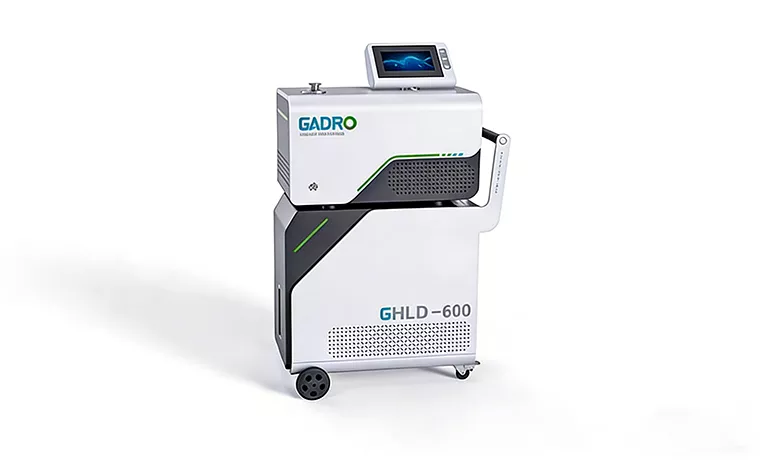
A sistema de prueba de fugas de helio is a highly specialized, non-destructive testing apparatus designed to detect and quantify the escape or ingress of gas in a sealed component. It utilizes helium as a tracer gas and a mass spectrometer to measure its presence with astonishing accuracy.
¿Por qué helio?
Helium is the tracer gas of choice for several fundamental reasons rooted in physics and chemistry:
- Small Atomic Size: Helium is the second lightest element in the universe. Its tiny molecular structure allows it to penetrate and flow through microscopic tortuous leak paths that larger molecules (like nitrogen or oxygen) cannot pass through.
- Inert and Safe: Helium is a noble gas. It is non-toxic, non-flammable, and chemically inert, meaning it will not react with the HVAC components, lubricants, or residues present in the manufacturing environment.
- Low Atmospheric Background: Helium is present in the Earth’s atmosphere at a very low concentration (approximately 5 parts per million). This low background level ensures high signal-to-noise ratios, meaning when a mass spectrometer detects helium, it is almost certainly coming from the test part, not the surrounding air.
- Mobility: Helium disperses rapidly, allowing for very fast test cycle times, which is crucial for high-speed automated production lines.
The Mechanics of the Test
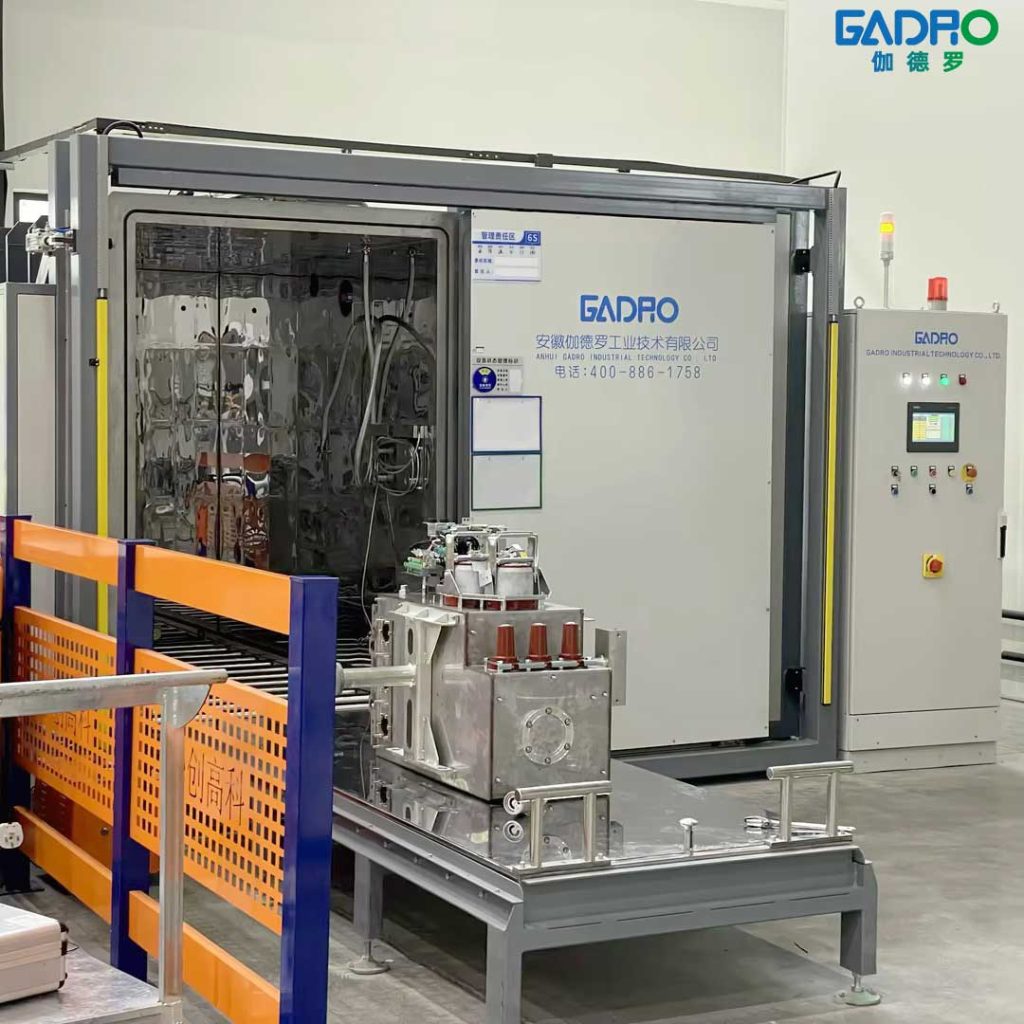
While there are different methods (such as sniffing or accumulation), the most accurate and widely used method for mass production of critical HVAC components is the Hard Vacuum (Chamber) Method.
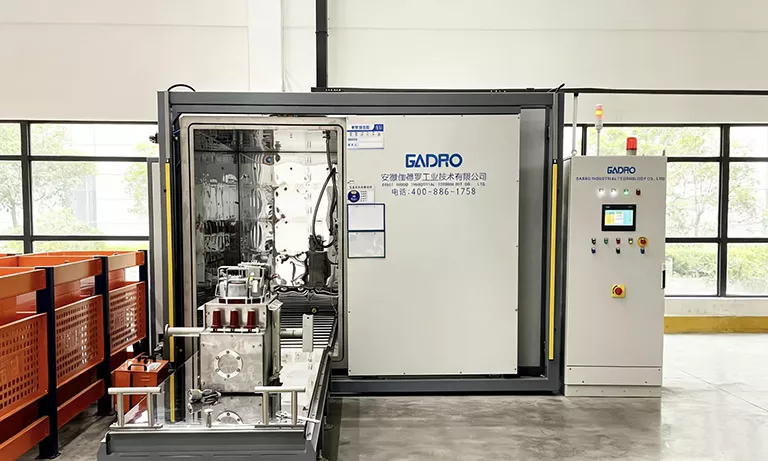
- Chamber Loading: The HVAC component (e.g., a heat exchanger coil) is placed inside a specially designed, vacuum-tight test chamber.
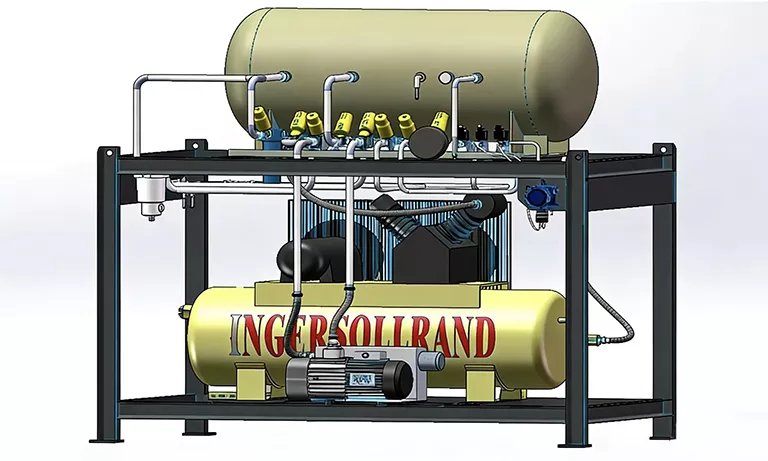
- Evacuación: Powerful vacuum pumps evacuate both the chamber (outside the part) and the internal volume of the test part to a very low pressure (a hard vacuum). This removes the background atmospheric helium.
- Pressurization: The interior of the HVAC component is then pressurized with pure helium or a helium-nitrogen mixture.
- Detección: A pressure differential is created. If there is a leak, the higher-pressure helium inside the component will be forced through the flaw and into the vacuum chamber.
- Analysis: The vacuum system draws the gas from the chamber into a helium mass spectrometer. The spectrometer ionizes the gas, separates the helium ions using a magnetic field, and precisely measures the quantity of helium escaping.
- Quantification: The system calculates the exact leak rate (e.g., in mbar·l/s or grams of refrigerant per year) and compares it against pre-programmed pass/fail criteria. If the leak is below the acceptable threshold, the part passes; if not, it is rejected.
Why HVAC Production Demands Precise Helium Leak Testing
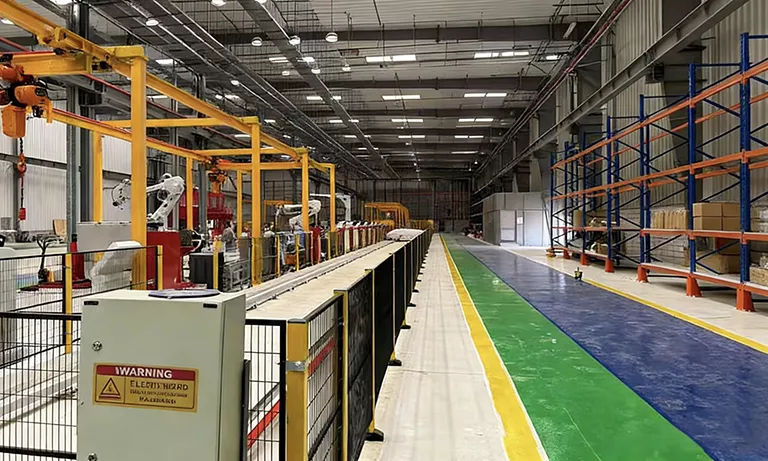
The integration of a precise helium leak test system into an HVAC manufacturing line is driven by several compelling factors that directly impact the bottom line, product quality, and brand reputation.
1. Unmatched Sensitivity and Accuracy for Microchannel Coils
As mentioned, microchannel technology is now ubiquitous in modern HVAC systems due to its superior heat transfer capabilities. However, the manufacturing of these coils involves complex brazing of hundreds of delicate aluminum joints. Even a microscopic porosity in a single braze joint can cause significant refrigerant loss over the lifespan of the unit.
Traditional underwater bubble testing relies on operator observation and requires a leak large enough to form a visible bubble against the hydrostatic pressure of the water. It is subjective, slow, and cannot reliably detect leaks smaller than 10^-3 mbar·l/s.
In stark contrast, a vacuum helium leak test system can detect leaks as small as 10^-12 mbar·l/s. This extreme sensitivity ensures that even the most minute, tortuous leak paths in microchannel coils are identified and rejected before the component leaves the factory floor. This guarantees that the final HVAC unit will maintain its refrigerant charge and operate at peak efficiency for years.
2. Consistency, Automation, and Cycle Time Reduction
In high-volume HVAC production, relying on human operators for critical quality control introduces unacceptable variability. An operator might miss a bubble, fail to wait long enough, or misinterpret a pressure drop.
Helium mass spectrometry offers a completely objective, quantifiable, and repeatable measurement. Modern systems are highly automated. The operator simply loads the part, connects the tooling, and presses start. The system automatically manages the vacuum cycles, gas injection, measurement, and venting.
This automation drastically reduces cycle times. While a pressure decay test might take minutes to stabilize and yield a reliable result for a large volume component, a hard vacuum helium test can often be completed in a fraction of that time, supporting high throughput manufacturing without compromising quality.
3. Compliance with Stringent Environmental Regulations
The HVAC industry is heavily regulated to prevent the emission of greenhouse gases and ozone-depleting substances. Regulations mandate strict limits on permissible annual refrigerant leakage rates. If an HVAC manufacturer consistently produces units that leak refrigerant into the atmosphere, they face severe financial penalties and regulatory action.
A sistema de prueba de fugas de helio provides the empirical data required to prove compliance. Manufacturers can correlate the helium leak rate directly to the equivalent loss of specific refrigerants (e.g., establishing that a helium leak of 10^-5 mbar·l/s equates to a loss of 2 grams of R-410A per year). This quantifiable assurance is impossible to achieve with rudimentary testing methods.
4. Drastic Reduction in Warranty Costs and Field Failures
A compressor or coil that fails in the field due to a manufacturing leak is a costly disaster. It involves dispatching a technician, diagnosing the issue, recovering remaining refrigerant, replacing the component, recharging the system, and managing customer dissatisfaction. The cost of a single field failure can wipe out the profit margin on dozens of healthy units.
By implementing precise helium testing at the component level, manufacturers intercept defective parts before they are integrated into the final assembly. This proactive approach drastically reduces scrap rates at final assembly, prevents faulty units from reaching the consumer, and slashes warranty claim expenses, resulting in a rapid return on investment for the test equipment.
5. Data Logging and Process Improvement
Modern helium testing systems do more than just sort good parts from bad; they generate valuable manufacturing data. Every test cycle records the specific leak rate, date, time, operator, and component serial number.
This data is crucial for continuous process improvement. If engineers notice a gradual increase in the average leak rate of a specific coil design, they can investigate the brazing process, adjust temperatures, or inspect tooling before catastrophic failures occur. This traceability is essential for maintaining ISO certifications and ensuring long-term manufacturing stability.
Comparing Leak Detection Methods in HVAC Manufacturing
To understand the necessity of helium testing, it is helpful to compare it directly against legacy methods.
| Característica | Water Bath (Bubble Test) | Caída de presión | Vacuum Helium Leak Test System |
| Sensibilidad | Low (~ 10^-3 mbar·l/s) | Medium (~ 10^-4 mbar·l/s) | Extremely High (up to 10^-12 mbar·l/s) |
| Test Output | Subjective (Operator visual) | Objective (Pressure drop) | Objective, Quantifiable Leak Rate |
| Speed for Small Leaks | Very Slow (requires observation) | Slow (requires long stabilization) | Fast (Immediate mass spec reading) |
| Automation Capability | Poor | Good | Excelente |
| Registro de datos | None | Sí | Comprehensive |
| Affected by Temp/Volume? | No | Highly Susceptible | Minimal Impact |
| Best Used For: | Gross leak location | Simple, small volume parts | Critical, high-value, complex components |
Desafíos y consideraciones
While the benefits are overwhelming, implementing a precise helium testing protocol does present specific challenges that manufacturers must navigate:
- Initial Capital Investment: Vacuum chambers, high-capacity pumps, and mass spectrometers represent a significant upfront capital expenditure compared to a simple water tank. However, as noted, the ROI through reduced warranty claims is typically very fast.
- Helium Costs and Conservation: Helium is a non-renewable resource, and its cost can fluctuate. To mitigate this, advanced HVAC production lines often integrate helium recovery systems. These systems capture the tracer gas after the test, purify it, and recompress it for the next cycle, recovering up to 95% of the gas and drastically lowering operational expenses.
- System Maintenance and Calibration: Vacuum systems require regular maintenance to perform optimally. Oil changes, seal replacements, and daily calibration using certified calibrated leak standards are mandatory to ensure the system is accurately reading the specified threshold.
- Background Management: The test environment must be carefully managed. If excess helium is released onto the factory floor during venting, it can be drawn into the mass spectrometer during the next test, causing false failures (a “high background”). Proper exhaust and ventilation design are critical.
Conclusión
In the modern landscape of HVAC manufacturing, “good enough” leak testing is no longer sufficient. The relentless push for higher efficiency, the adoption of complex microchannel architectures, and the strict regulatory environment regarding refrigerant containment demand a superior approach to quality control.
A precise sistema de prueba de fugas de helio is not just an optional upgrade; it is a foundational requirement for any manufacturer committed to producing reliable, efficient, and environmentally compliant HVAC equipment. By providing unmatched sensitivity, objective quantification, and rapid cycle times, this technology protects the manufacturer’s bottom line by virtually eliminating field failures and warranty claims caused by component leakage. As the HVAC industry continues to evolve towards more sustainable and high-performance solutions, the reliance on advanced helium mass spectrometry will only continue to grow, cementing its status as the gold standard in leak detection.
Preguntas frecuentes
Is it necessary to use 100% pure helium for the test, or can a mixture be used to save costs?
In many HVAC production scenarios, 100% pure helium is not strictly necessary. To reduce operational costs, manufacturers often use a mixture of helium and an inexpensive, inert carrier gas like nitrogen (e.g., a 10% helium / 90% nitrogen mix). Because the mass spectrometer is incredibly sensitive, it can easily detect the helium component within the mixture. The system’s software calculates the total leak rate based on the known concentration of the tracer gas, providing an accurate result while significantly reducing helium consumption.
How does a helium leak test handle the temperature fluctuations commonly found in a manufacturing environment?
One of the major weaknesses of the Pressure Decay method is its extreme sensitivity to temperature variations; even a slight change in ambient temperature during the test can cause pressure changes inside the part, leading to false passes or false fails. A hard vacuum helium leak test system is largely immune to these typical temperature fluctuations. Because the mass spectrometer is measuring the actual physical flow of helium molecules escaping the part, rather than relying on pressure derivations, the test remains highly accurate and stable regardless of normal factory temperature changes.
If a component fails the helium leak test in the vacuum chamber, how do we find exactly where the leak is so we can repair it?
The hard vacuum chamber method is a “global” test; it tells you with absolute certainty if the part is leaking and how much it is leaking, but it does not pinpoint the location. If a part fails the chamber test, it is typically moved to a secondary rework station. Here, an operator uses a “Sniffer” method. The part is pressurized with helium, and the operator uses a handheld probe connected to a mass spectrometer to slowly trace along all braze joints and connections. When the probe passes over the exact location of the flaw, it detects the escaping helium and alerts the operator, allowing for precise repair before the part is re-tested in the main chamber.