



Inhaltsverzeichnis
In the highly competitive and heavily regulated Heating, Ventilation, and Air Conditioning (HVAC) manufacturing industry, ensuring product integrity is paramount. Even the most microscopic leaks in heat exchangers, condensing units, compressors, or refrigeration coils can lead to catastrophic system failures, diminished energy efficiency, costly warranty claims, and significant safety or environmental hazards. To mitigate these risks, manufacturers rely heavily on tracer gas leak detection methods during the assembly and quality control processes.
For decades, the debate between utilizing helium or hydrogen as the primary tracer gas has been a focal point for production engineers. While both gases offer distinct advantages over traditional pressure decay or water bath testing, the specific demands of modern HVAC manufacturing often dictate a clear preference. This comprehensive guide explores the nuances of Helium vs. Hydrogen tracer gases and details exactly why investing in a dedicated Helium-Lecktestsystem remains the gold standard for reliable, high-volume HVAC production.
Leak Detection in HVAC Production
Before delving into the specific tracer gases, it is essential to understand why micro-leak detection is so critical in the HVAC sector. HVAC systems operate under significant pressures and utilize specialized refrigerants (such as R-410A, R-32, or newer low-GWP alternatives). A leak that allows refrigerant to escape or ambient moisture to enter the system can cause:
- Reduced Cooling/Heating Capacity: Loss of refrigerant immediately impacts the thermodynamic efficiency of the unit.
- Compressor Failure: Moisture ingress can mix with compressor oils, creating acids that degrade internal components and lead to premature mechanical failure.
- Environmental Impact: Many traditional refrigerants are potent greenhouse gases. Regulatory bodies mandate strict maximum allowable leak rates to minimize environmental damage.
- Brand Damage and Warranty Costs: Units that fail in the field require expensive technician dispatch, replacement parts, and severely damage the manufacturer’s reputation for reliability.
To ensure compliance with stringent quality standards (often requiring leak reject rates equivalent to 0.1 oz/yr of refrigerant or tighter), manufacturers must utilize highly sensitive tracer gases. The two most viable candidates are helium and hydrogen.
Understanding Hydrogen Leak Testing
When industry professionals discuss hydrogen leak detection, they are rarely referring to pure hydrogen. Pure hydrogen is highly flammable and explosive over a wide range of concentrations, making it entirely unsuitable and unsafe for standard factory environments.
Instead, hydrogen leak testing utilizes a safe, non-flammable mixture known as “forming gas.” Forming gas consists of 5% hydrogen and 95% nitrogen.
Advantages of Hydrogen (Forming Gas)
- Cost-Effectiveness: Nitrogen is abundant and cheap, making the 5%/95% forming gas mixture significantly less expensive to purchase than industrial-grade helium.
- Low Background Interference: Because hydrogen is very light and dissipates rapidly upward, background accumulation in well-ventilated test areas can sometimes be lower than helium, potentially allowing for faster sensor recovery after a gross leak is detected.
- Abundant Supply: Unlike helium, which is subject to global supply chain volatility, the components of forming gas are readily available globally.
Disadvantages of Hydrogen in HVAC Production
Despite its lower upfront gas cost, hydrogen presents several significant limitations that make it less ideal for the rigorous demands of HVAC manufacturing:
- Diluted Sensitivity: Because forming gas is only 5% active tracer gas (hydrogen), its absolute sensitivity is inherently limited compared to 100% helium. While hydrogen molecules are small and move quickly, the mass spectrometer or solid-state sensor is only “seeing” one-twentieth of the gas escaping from a leak. For detecting the ultra-fine micro-leaks required for modern, high-pressure HVAC coils, hydrogen often falls short of the required leak reject rates.
- False Positives in Sniffer Applications: In manual “sniffer” testing, the rapid dispersion of hydrogen can sometimes make pinpointing the exact location of a leak difficult, leading to false positives or requiring excessive time to isolate a fault on a complex heat exchanger.
- Suitability for Vacuum Chamber Testing: The highest level of leak detection in HVAC production is achieved using hard vacuum chambers. Hydrogen is notoriously difficult to pump away in a high-vacuum environment because it is so light and tends to adhere to the stainless steel walls of the vacuum chamber (a phenomenon known as outgassing). This can result in a high, unstable background signal within the chamber, drastically reducing the sensitivity and repeatability of the automated test.
- Safety Protocols: While 5% forming gas is non-flammable, any system blending or handling hydrogen requires strict safety protocols, specialized ventilation, and constant monitoring to ensure the mixture never inadvertently reaches combustible concentration levels if separation occurs.
The Superiority of the Helium Leak Test System
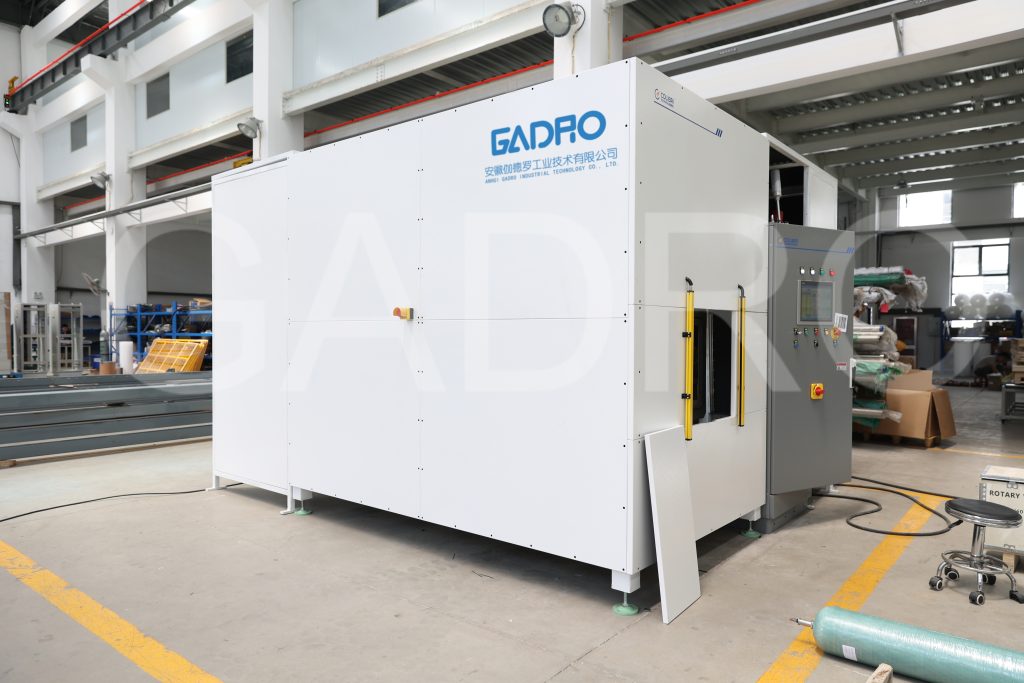
Helium (He) is a noble gas, possessing unique physical and chemical properties that make it the undisputed champion of tracer gas leak detection. A dedicated Helium Leak Test System utilizes a mass spectrometer tuned specifically to the atomic mass of helium (mass 4), providing unparalleled accuracy.
1. Unmatched Sensitivity for Micro-Leaks
The primary reason manufacturers choose helium is its extraordinary sensitivity. Helium has an extremely small atomic size and low viscosity, allowing it to easily penetrate microscopic pathways, porosities in welds, and faulty braze joints that heavier gases (like air or nitrogen) simply cannot pass through.
Furthermore, because helium can be used safely at 100% concentration, the mass spectrometer detects the full volume of escaping gas, not a diluted fraction. A high-quality Helium-Lecktestsystem can accurately detect leak rates as small as 1 * 10^-9 atm-cc/sec, far exceeding the stringent requirements for residential and commercial HVAC units. This ensures that even the most minuscule defects are caught before the unit leaves the factory floor.
2. Absolute Chemical Inertness
Helium is a completely inert noble gas. It does not react with other chemicals, metals, plastics, or compressor oils.
- Non-Toxic and Non-Flammable: Helium poses zero fire hazard and is completely non-toxic, making it exceptionally safe for operators in high-volume production environments.
- No Contamination: Unlike some traditional testing methods (like water dunking) that can introduce moisture, or reactive gases that might degrade internal coatings, helium leaves no residue. After testing, the helium is simply evacuated, leaving the internal components of the HVAC unit pristine and ready for final refrigerant charging.
3. Ideal for Hard Vacuum Chamber Testing
For high-throughput HVAC production lines manufacturing condensing units, evaporator coils, or compressors, the most efficient and accurate testing method is the “charge-in-chamber” or hard vacuum method.
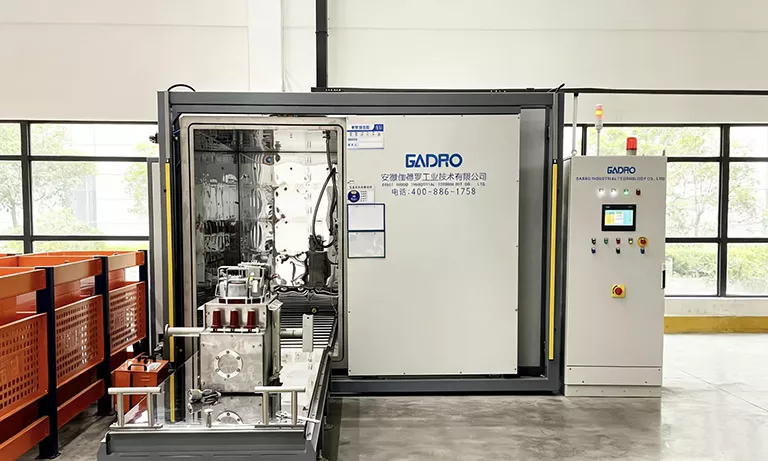
In this process, the Unit Under Test (UUT) is placed inside a sealed vacuum chamber. Both the chamber and the UUT are evacuated. The UUT is then pressurized with helium. If a leak exists, helium flows outward into the vacuum chamber, where it is instantly detected by the mass spectrometer.
Helium is perfectly suited for this environment. It pumps away cleanly and predictably, allowing the vacuum chamber to maintain a low, stable background signal. This translates to incredibly fast cycle times (TAKT times) and highly repeatable, automated pass/fail results that remove operator subjectivity from the quality control equation.
4. Low Natural Background Concentration
Air is composed primarily of nitrogen (78%) and oxygen (21%). Helium exists naturally in the atmosphere at an incredibly low concentration of just 5 parts per million (ppm). This exceptionally low background level means that mass spectrometers do not have to filter through heavy “noise” to find a leak. When the spectrometer detects helium escaping from an HVAC component, the signal is clear, distinct, and unmistakable.

Overcoming the Cost Barrier: The Helium Recovery System
When evaluating Helium vs. Hydrogen, the most common argument against helium is the cost and availability of the gas itself. Helium is a non-renewable resource, and global supply fluctuations can lead to price spikes.
However, modern HVAC manufacturers solve this economic challenge by integrating a Helium-Rückgewinnungssystem into their production lines.
How Helium Recovery Works
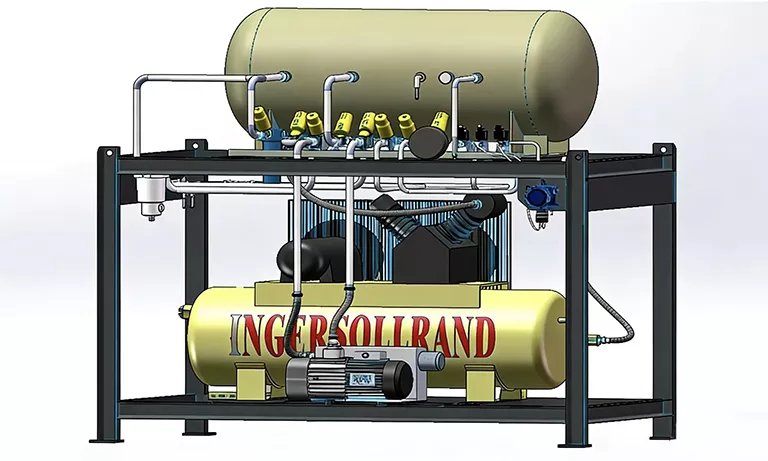
A Helium-Rückgewinnungssystem is engineered to recapture, purify, and reuse the tracer gas after the leak test is complete, rather than venting it into the atmosphere.
The process typically involves:
- Extraction: After the leak test, the helium is evacuated from the HVAC component through dedicated exhaust lines.
- Analysis: The recovered gas passes through an analyzer that measures its concentration and purity.
- Compression and Storage: If the gas meets the required purity threshold (often 95% or higher), it is compressed and transferred to a high-pressure storage tank.
- Blending: If the concentration falls slightly, the system automatically blends in a small amount of virgin helium to return the mixture to the optimal testing specification.
The ROI of Helium Recycling
Implementing a Helium-Rückgewinnungssystem drastically alters the economic calculus of leak testing. These systems can routinely recover and recycle up to 95% of the helium used in the testing process.
For HVAC manufacturers testing large volumes of high-capacity equipment (such as commercial rooftop units or large residential condensers), the savings are substantial. The Return on Investment (ROI) for a Helium-Rückgewinnungssystem is typically achieved within 18 to 24 months, depending on production volume and operating pressures.
By utilizing recovery technology, manufacturers secure all the technical advantages—superior sensitivity, safety, and cycle speed—of a Helium-Lecktestsystem while insulating their operations from gas market volatility and significantly lowering their long-term cost of ownership.
Helium vs. Hydrogen in HVAC Manufacturing
To clearly illustrate why helium remains the preferred choice for critical HVAC components, the following table compares the two methods across key manufacturing metrics.
| Feature / Metric | Helium Leak Testing (100% He) | Hydrogen Leak Testing (5% He / 95% N2) |
| Tracer Gas Sensitivity | Exceptional (Capable of < 1 * 10^-9 atm-cc/sec) | Mäßig (Limited by 5% dilution) |
| Safety in Production | Maximum Safety (100% Inert, Non-flammable, Non-toxic) | Good (Mixture is non-flammable, but requires strict blending controls) |
| Vacuum Chamber Suitability | Exzellent (Stable background, pumps away cleanly, fast cycles) | Poor (High outgassing, adheres to chamber walls, slow recovery) |
| Chemical Inertness | Perfect (No reaction with components or oils) | Good (Generally inert in forming gas mixture) |
| Initial Gas Cost | Hoch (Subject to market fluctuations) | Niedrig (Nitrogen base is cheap and abundant) |
| Long-Term Operating Cost | Low to Moderate (When paired with a Helium-Rückgewinnungssystem) | Mäßig (Continuous consumption of forming gas) |
| False Positives (Sniffing) | Niedrig (Distinct signal against 5 ppm background) | Mäßig (Rapid dispersion can obscure exact leak location) |
Securing Quality in HVAC Production
In the demanding environment of HVAC-R manufacturing, the cost of a missed leak far outweighs the investment in robust testing infrastructure. Field failures result in expensive service calls, lost refrigerant, environmental penalties, and irreparably damaged brand trust.
When evaluating Helium vs. Hydrogen for production-line quality control, the technical superiority of helium is undeniable. Its atomic size allows for the detection of the most insidious micro-leaks, its inert nature guarantees a safe working environment and pristine internal components, and its compatibility with hard vacuum chambers ensures rapid, repeatable, and automated testing cycles.
While the upfront cost of helium gas is higher than hydrogen forming gas, this objection is entirely mitigated by the implementation of a modern Helium-Rückgewinnungssystem. By recycling up to 95% of the tracer gas, HVAC manufacturers can achieve a rapid ROI, minimize their environmental footprint, and ensure that every unit leaving their facility meets the highest standards of hermetic integrity. For those committed to delivering reliable, efficient, and leak-free thermal management solutions, the Helium-Lecktestsystem remains the ultimate, uncompromising choice.
Häufig gestellte Fragen
If forming gas (hydrogen/nitrogen) is cheaper, why is it rarely used in automated vacuum chamber testing for HVAC units?
The primary reason is that hydrogen is extremely light and “sticky” in a vacuum environment. It tends to adhere to the stainless steel walls of the vacuum chamber (outgassing), which creates a high and unstable background signal. This makes it very difficult for the mass spectrometer to quickly differentiate between a true leak and residual gas from a previous test, resulting in unacceptably slow cycle times (TAKT times) and reduced sensitivity for high-volume automated production. Helium pumps away much more cleanly and predictably.
Can a Helium Recovery System be added to an existing leak test line, or does it require a completely new setup?
In most cases, a Helium-Rückgewinnungssystem can be retrofitted or integrated into an existing helium leak test station. It requires modifying the exhaust plumbing to route the evacuated gas to the recovery unit, which consists of surge tanks, compressors, gas analyzers, and purification filters. Manufacturers specializing in leak test automation can evaluate your current equipment, assess your gas usage, and design a modular recovery solution that seamlessly integrates with your existing PLC controls.
How do I know if my HVAC product requires the sensitivity of a Helium Leak Test System?
The requirement for helium testing is usually dictated by the operating pressure of your system, the type of refrigerant used, and your internal quality standards (often expressed as an allowable leak rate, e.g., 0.1 oz of refrigerant per year). Products utilizing high-pressure refrigerants (like R-410A or CO2), hermetically sealed compressors, or complex microchannel heat exchangers almost universally require the sensitivity of helium to ensure long-term reliability. If your current testing method (like pressure decay or water bathing) is passing units that later fail in the field due to micro-leaks, it is a strong indicator that you need to upgrade to helium tracer gas detection.