



Tabla de contenido
En el complejo mundo del mantenimiento industrial y el control de calidad, la capacidad de detectar la fuga más pequeña puede marcar la diferencia entre la excelencia operativa y una falla catastrófica. Al entrar en 2026, la demanda de Detectores portátiles de fugas de helio ha aumentado, impulsado por la necesidad de pruebas no destructivas (NDT) que sean altamente sensibles y lo suficientemente móviles para el servicio de campo.
El cambio hacia la movilidad en la detección de fugas
Tradicionalmente, la detección de fugas de helio de alta precisión se limitaba a unidades de vacío estacionarias de sobremesa. Sin embargo, la infraestructura moderna, desde los cuadros de distribución de las centrales eléctricas hasta las tuberías subterráneas, requiere equipos que se desplacen hasta el problema. La última generación de detectores portátiles soluciona este problema, ofreciendo... sensibilidad de grado de laboratorio en un formato portátil y robusto.
Para los distribuidores y gerentes de compras, la propuesta de valor es clara: Tiempo de inactividad mínimo. Un técnico equipado con una unidad liviana y de respuesta rápida puede inspeccionar geometrías complejas e instalaciones remotas sin desmontar los sistemas.
Métricas técnicas que definen la calidad
Al evaluar proveedores de detectores de helio portátiles, tres parámetros técnicos son primordiales:
- Sensibilidad (tasa mínima de fuga detectable):
Para aplicaciones de rastreo, un dispositivo de alta gama debería detectar con fiabilidad fugas de hasta $1 \times 10^{-7} \text{mbar}\cdot\text{l/s}$. Este nivel de precisión es indispensable para industrias como la fabricación de semiconductores o el mantenimiento de sistemas de ultra alto vacío (UHV), donde incluso una penetración microscópica puede arruinar un proceso. - Tiempo de respuesta y recuperación:
El tiempo es oro en el campo. Los detectores de primera línea cuentan con microbombas de alta succión que garantizan una tiempo de respuesta de menos de 1 segundoIgualmente importante es el tiempo de recuperación: la rapidez con la que el sensor se recupera tras detectar una fuga masiva. Los algoritmos avanzados de supresión de fondo permiten que el dispositivo reduzca a cero automáticamente el helio ambiental, lo que evita falsas alarmas en entornos saturados. - Ergonomía y preparación para el campo:
Un dispositivo pesa mucho en el brazo de un técnico durante un turno de 8 horas. Los principales fabricantes ahora priorizan diseños ligeros (a menudo menos de 3 kg para la unidad principal) combinados con baterías de litio de alta capacidad Capaz de mantener un funcionamiento continuo durante más de 10 horas.
Diversas aplicaciones industriales
La versatilidad de los detectores de helio portátiles los hace indispensables en todos los sectores:
- Generación de energía: Esencial para probar tubos de condensadores y sistemas de enfriamiento de generadores.
- HVAC y refrigeración: Se utiliza con helio como gas trazador para encontrar fugas en intercambiadores de calor que las pruebas de burbuja tradicionales no detectan.
- Automotriz y aeroespacial: Validar la integridad de los sistemas de combustible, bolsas de aire y líneas de oxígeno donde la seguridad es fundamental.
La solución de Gadro
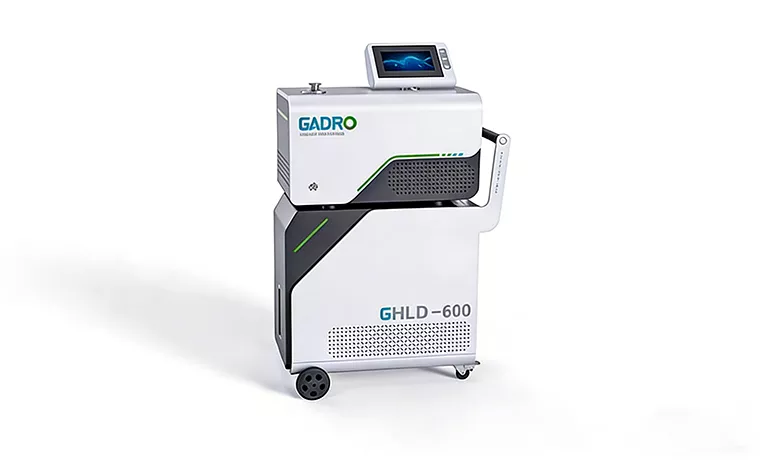
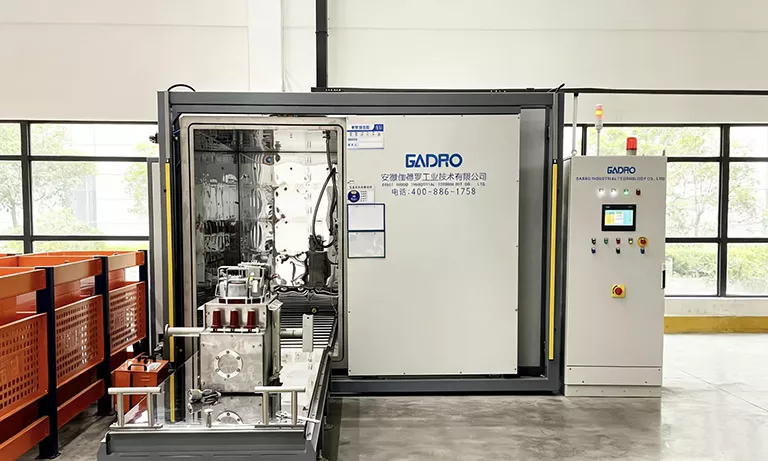
En un mercado inundado de herramientas genéricas, Detector de fugas de helio portátil de Gadro Destaca por integrar una robusta tecnología de rastreo con interfaces de usuario intuitivas. Diseñado para las duras condiciones de las instalaciones industriales, combina una rápida capacidad de respuesta con la durabilidad necesaria para el uso diario en campo. Ya sea para la comprobación de hornos de vacío o cables presurizados, esta herramienta proporciona los datos prácticos que necesitan los equipos de mantenimiento.

Preguntas frecuentes
¿Cuál es la diferencia entre el “Modo Sniffer” y el “Modo Vacío” en los detectores portátiles?
El "Modo Rastreador" detecta fugas al aspirar el helio que escapa de un objeto de prueba presurizado hacia la atmósfera. El "Modo Vacío" (si está disponible en la unidad portátil) detecta el helio que entra en un objeto de prueba evacuado desde el exterior. La mayoría de las unidades de campo portátiles destacan principalmente por el Modo Rastreador para sistemas presurizados.
¿Cómo maneja el dispositivo los altos niveles de fondo de helio en una habitación cerrada?
Los detectores portátiles de alta calidad cuentan con una función de "Cero" o "Supresión de Fondo". Esta función recalibra el sensor al nivel actual de helio ambiental, lo que permite que el dispositivo detecte aumenta en concentración (la fuga) incluso si el fondo es elevado.
¿Cuál es el tiempo de respuesta típico para esta unidad portátil?
Para un detector portátil eficaz, el tiempo de respuesta debe ser casi instantáneo, normalmente < 1 segundoEsto permite a los técnicos escanear superficies rápidamente sin perder de vista ninguna fuga debido al retraso del sensor.
¿Puede este detector identificar gases distintos del helio?
Si bien están optimizados para helio (He), que tiene una masa atómica pequeña para una fácil penetración, muchos sensores avanzados también se pueden calibrar para detectar mezclas de hidrógeno (H2), lo que ofrece flexibilidad según el gas trazador disponible en su región.
¿Con qué frecuencia es necesario calibrar o reemplazar el sensor?
Las unidades portátiles están diseñadas para durar, pero la fuente de iones o el filamento son consumibles. Dependiendo de la intensidad de uso, podría requerirse mantenimiento anual. Sin embargo, muchas unidades modernas cuentan con rutinas de autocalibración que verifican la precisión antes de cada uso para garantizar la integridad de los datos.